💎About the Project

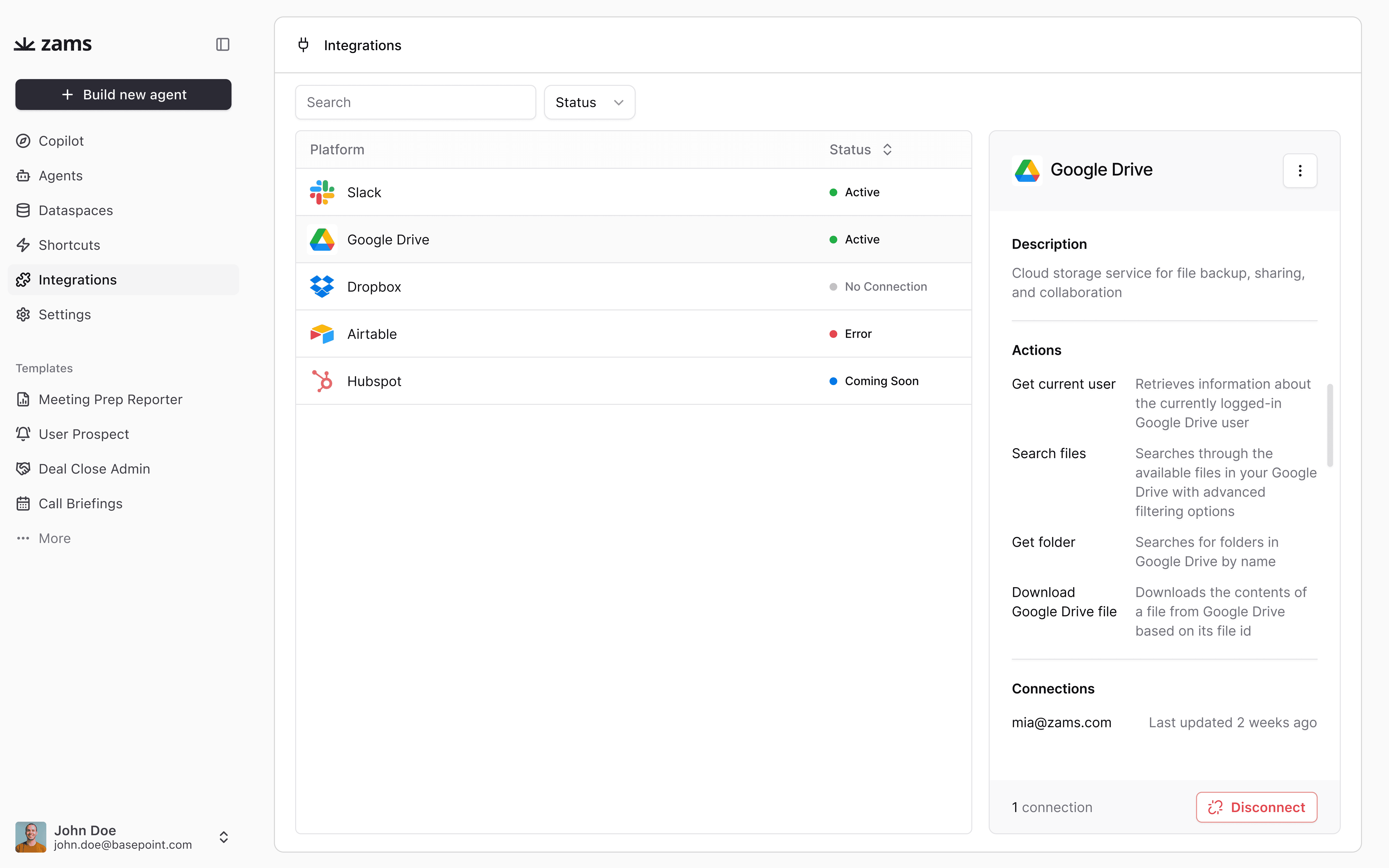
Zams connects tools like email, CRM, and internal data so AI agents can do real work.

As the product evolved, agents could chat, remember information, process CSV files, run tasks in the background, and respond to schedules or events.
My Role

As the founding product designer on the core team, I helped turn a fast-growing set of AI capabilities into a product structure people could actually navigate.

I worked closely with the CEO and engineers to define how agents should behave, where they should live in the product, and how users should understand them.

Founding Designer

Founding Designer

Product Thinking
Design System

Design System

Visual Design

Visual Design

Product Thinking

My Role

As the founding product designer on the core team, I helped turn a fast-growing set of AI capabilities into a product structure people could actually navigate.

I worked closely with the CEO and engineers to define how agents should behave, where they should live in the product, and how users should understand them.

Founding Designer

Product Thinking

Design System

Visual Design

Responsive Design
Responsive Design
Responsive Design

🤦‍♂️ Problem Space

The system was becoming more capable, but also harder to understand.

People couldn’t always tell what an agent was, where it lived, or what it was doing.

The system was becoming more capable, but also harder to understand.

People couldn’t always tell what an agent was, where it lived, or what it was doing.

Chat was doing too much

Early on, chat was carrying almost everything.

Early on, chat was carrying almost everything.

People talked to agents in chat, configured them in chat, and started long-running work from chat.

That worked for simple tasks, but it became harder to manage as the product grew.

The issue wasn’t a lack of features. It was a lack of structure.

People talked to agents in chat, configured them in chat, and started long-running work from chat.

That worked for simple tasks, but it became harder to manage as the product grew.

I focused on...

1

1

Defining where conversation should happen, and where agent logic should live

2

2

Shaping core agent structures like Setup, Config, and Activity

3

3

Making invisible behaviors, like triggers, schedules, and background work, easier to see and trust

4

4

Designing new interaction patterns for data-heavy workflows, including CSV and file upload flows

🖲️ Solution

One: Giving agents a home
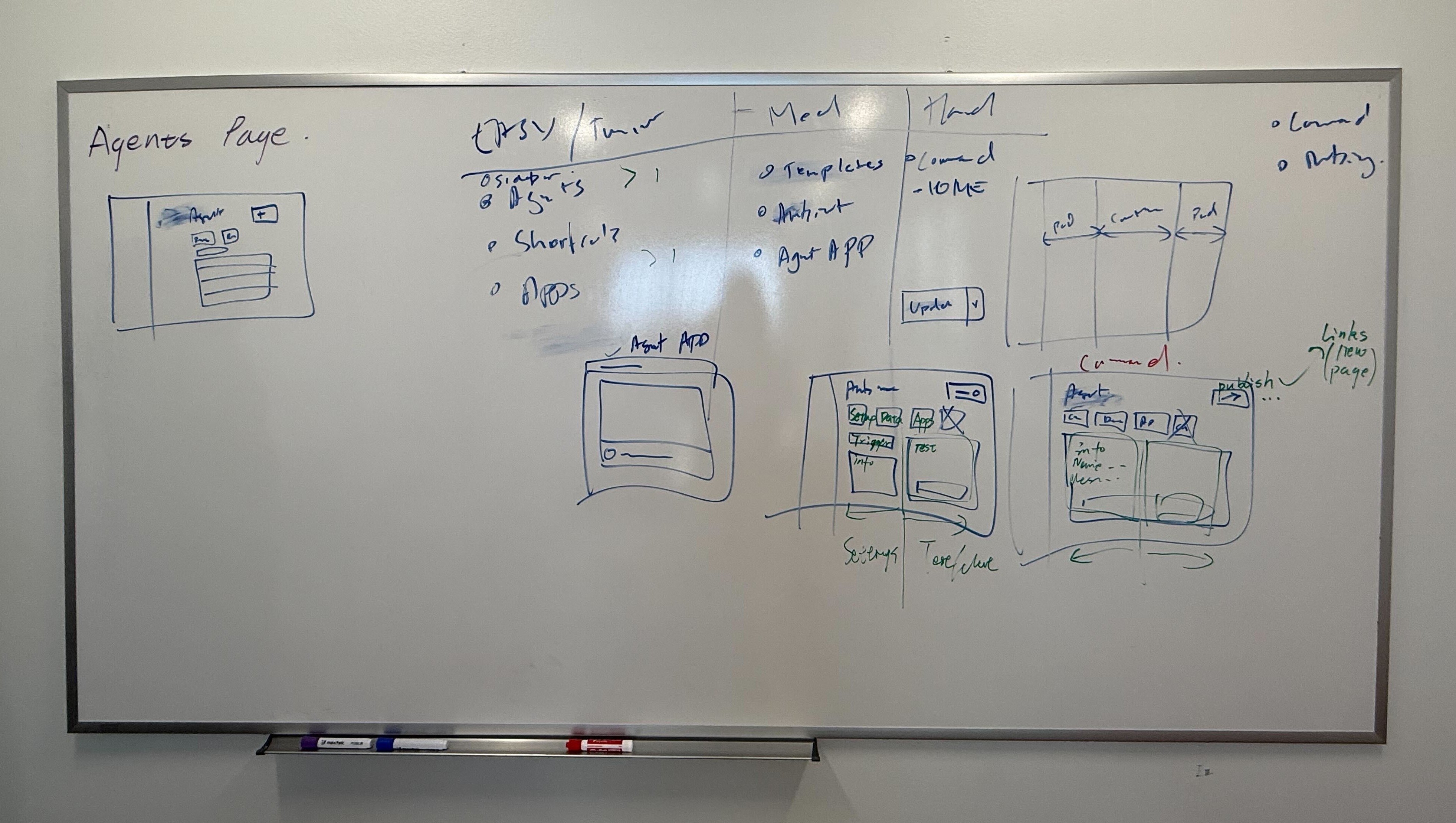
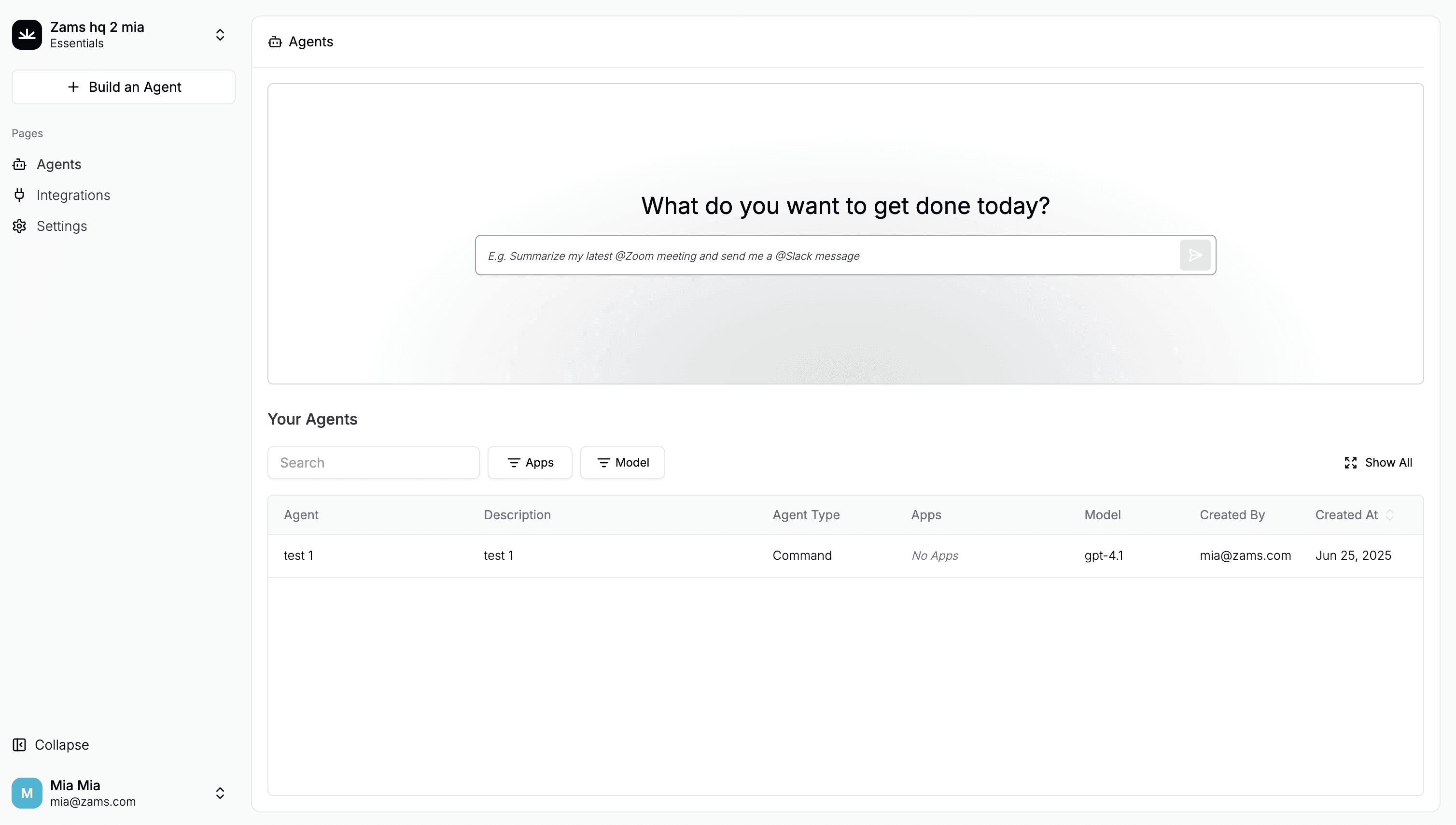
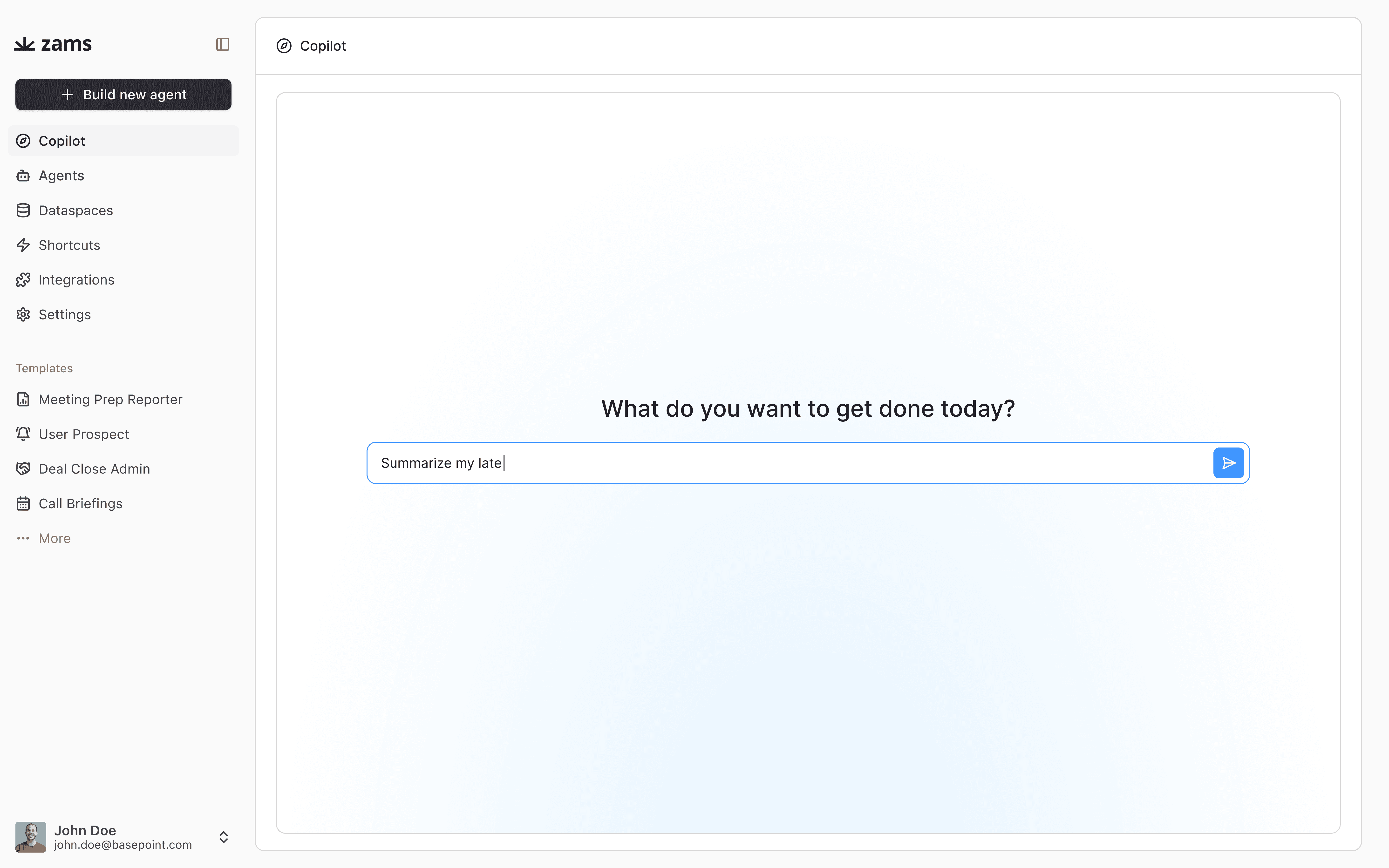
One of the biggest shifts was separating Copilot from agent management.

One of the biggest shifts was separating Copilot from agent management.

Copilot became the place for conversation and quick execution.

Agent pages became the place for setup, behavior, and history.

I helped…

shape a clearer structure around Setup, Config, and Activity, so agents no longer lived only inside a chat thread.

They became stable product objects with logic, state, and history.

They became stable product objects with logic, state, and history.

🖲️ Solution

Two: Making automation visible

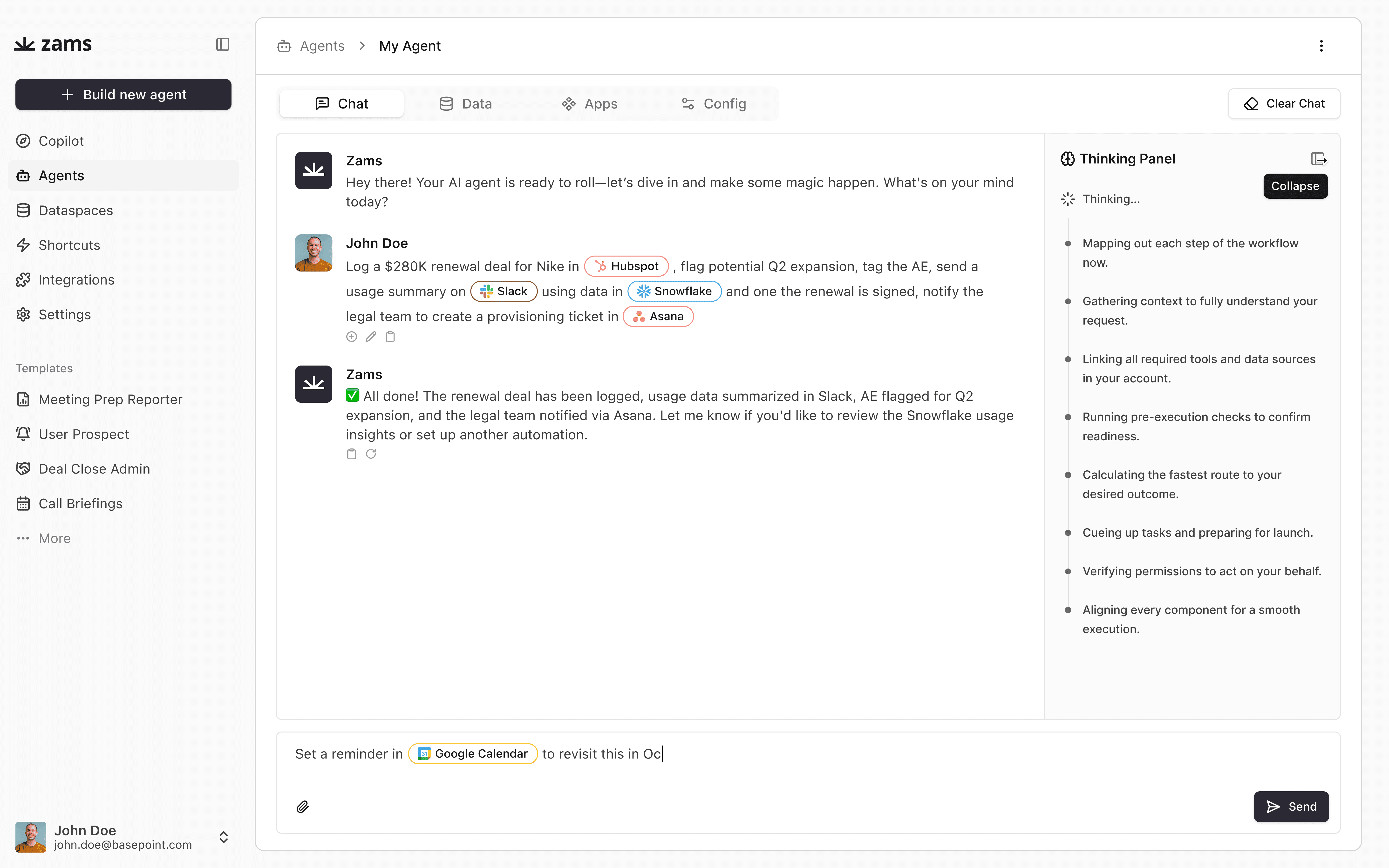
As agents became more autonomous, people needed to understand when they would run, and why.

Automation feels risky when people can’t see how it works.

I worked on making execution more visible in the chat experience…

showing when the agent was gathering context, linking tools, or preparing actions

helping users understand the difference between a quick response and a multi-step task happening behind the scenes

🖲️ Solution

Three: Designing for long-running work

CSV workflows exposed the limits of a chat-only model.

A task could take minutes, affect hundreds of rows, and fail only partially.

People needed more than a response.
They needed progress, context, and control.

I helped define a clearer pattern for this kind of work:
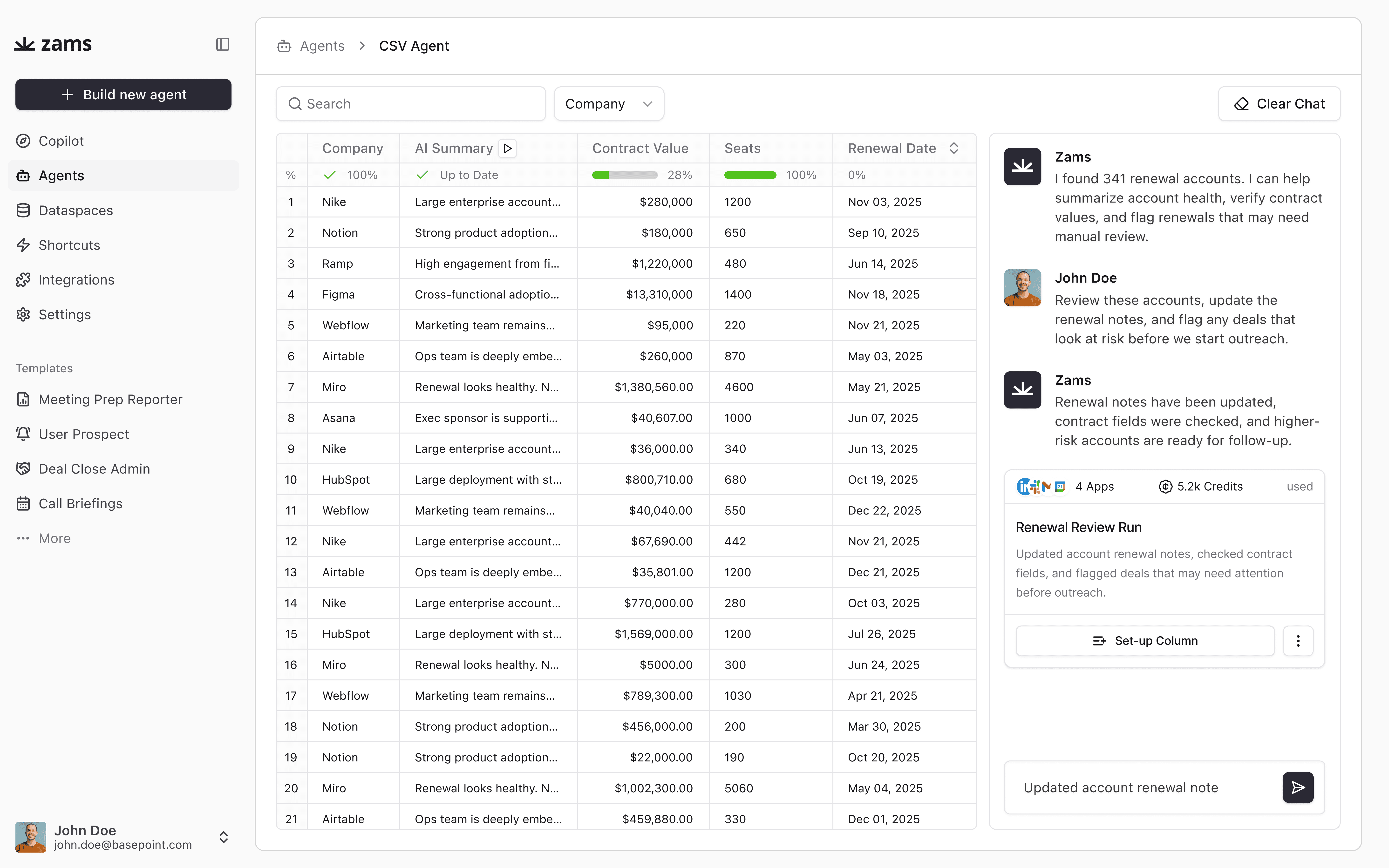
a table-based surface, conversational guidance, and visible background task progress.
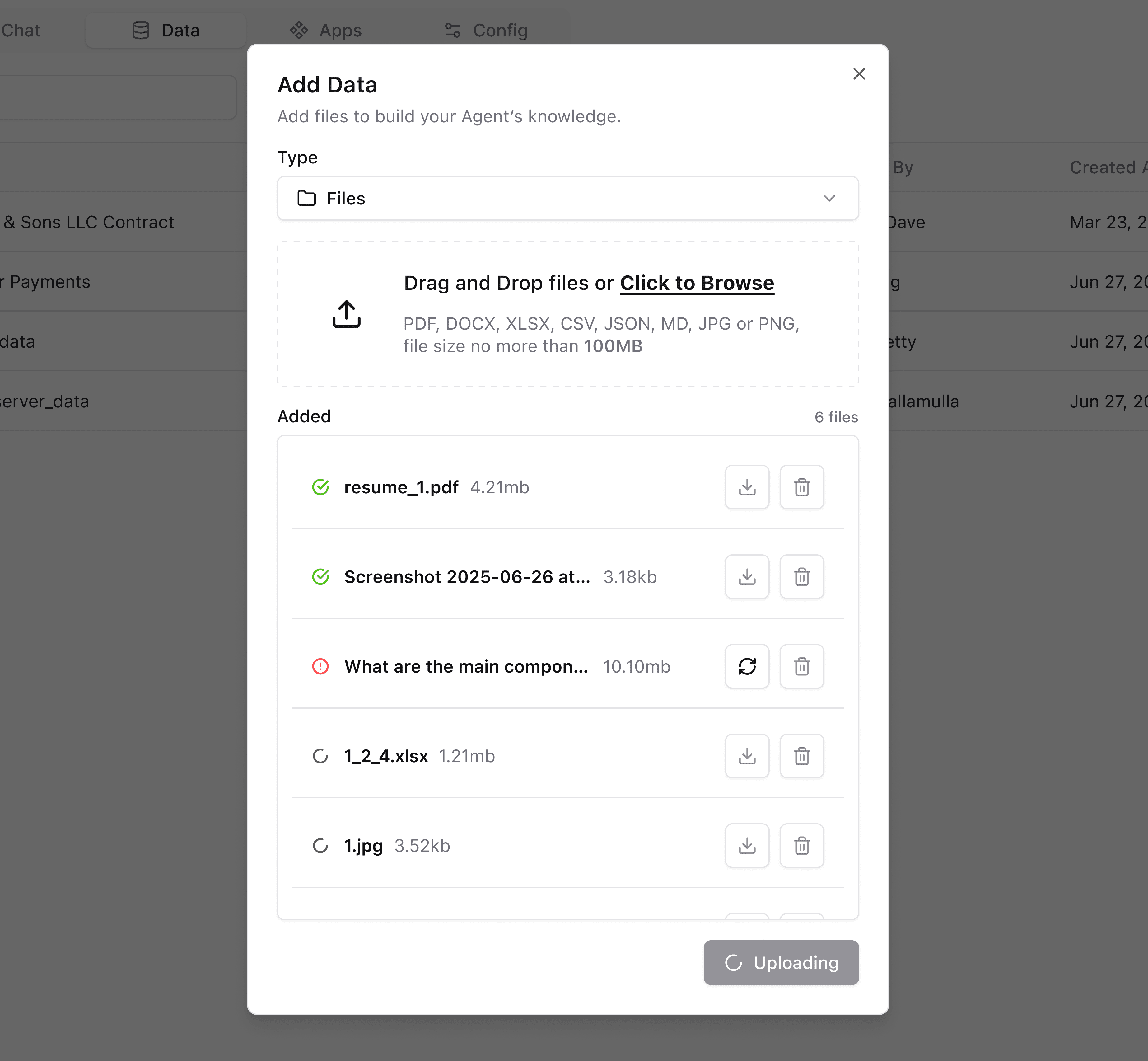
A smaller flow, same principle.

A smaller flow, same principle.

I also designed a drag-and-drop files experience for file-based tasks.

I also designed a drag-and-drop files experience for file-based tasks.

As we moved it toward implementation, I used Cursor to help bring the flow to life.

As we moved it toward implementation, I used Cursor to help bring the flow to life.

What started as a file-upload interaction ended up improving the product beyond that flow itself.

💎Wrap up

This work helped the team move from designing isolated AI features to building a more coherent model of what an agent product could be.

Instead of putting every new capability inside chat,
we started designing around clearer product patterns:


conversation, configuration, automation, and long-running work.

This work helped the team move from designing isolated AI features to building a more coherent model of what an agent product could be.

Instead of putting every new capability inside chat, we started designing around clearer product patterns:

conversation, configuration, automation, and long-running work.

What I learned

Power alone is not the experience.

In AI products, people need to understand what the system is doing, where it lives, and how much control they have.

At Zams, my work was about making that possible.

© 2026, All Rights Reserved

© 2026, All Rights Reserved

© 2026, All Rights Reserved